Introduction:
“I have 10 years of experience in the field and have been able to hone my skills working on various projects over the years.” My cousin needed to borrow a car for precisely 19 days when he arrived from Denver two summers ago. We were all unaware that short-term, flexible auto insurance was a real product you could purchase, so what transpired was a bewildering muddle of phone calls, insurer refusal letters, and one very anxious evening on Reddit. Flexible Short-Term Car Insurance Plans in the USA (2026)
It took us approximately twelve minutes to figure it out and cover her. The difference between “this exists” and “here’s how it truly works” is precisely the subject of this article.
So What Even Is Short-Term Car Insurance?
In the US, standard auto insurance has coverage periods of either six months or a year. If you possess a car and drive it every day, that’s fantastic. However, what about circumstances that don’t suit that description?
You may be covered by short-term auto insurance, often known as temporary auto insurance, for a day or several months. Consider it similar to renting rather than purchasing insurance. You pay for the precise amount of time you require, after which it expires. No annual commitment, no cancellation penalties, and no uncomfortable “please hold” calls in the middle of the year.
Although the US market has been slower to adopt it, it has long been popular in the UK. As of 2025, however, you have real options, and they’re really good.
“If you only need coverage for three weeks, you shouldn’t have to pay for a whole six-month insurance. You don’t benefit from the math.
Who Actually Needs This?
When I began to pay attention to this information, I saw that it kept popping up in very particular circumstances. I’ve observed the following people using it:
1. For the summer, college students are at home
Although your child attends an out-of-state school, they are covered by your coverage at home. You need coverage when they come back for ten weeks in the summer. Even though they hardly drive, adding them all year round is costly.
2. Borrowing a friend’s car for a road trip
It’s not always easy for personal auto insurance to cover other people’s cars, particularly while traveling for a long time. That gap is closed without drama with a temporary policy.
3. I recently purchased a secondhand car and urgently need coverage
On a Saturday afternoon, you purchased an automobile from a private seller or at an auction. Without evidence of insurance, the majority of dealerships won’t let you leave the lot; short-term coverage gives you more time to properly shop.
4. Seasonal driver
Some people own a second vehicle that is only available during specific months, such as a convertible, a truck for a cabin, or an antique car. It makes no sense to pay for 12 months of complete coverage on a vehicle you drive from May through September.
5. Immigrants and international visitors
A typical 6-month insurance policy is frequently not immediately available for someone traveling to the US on a visa or a new resident who is still getting settled. The gap is filled by short-term covering.
What “Flexible” Actually Means—and What It Doesn’t
The term “flexible” in insurance marketing frequently refers to flexible billing cycles rather than necessarily changeable coverage levels, which surprised me. Make sure you comprehend what you’re receiving.
A short-term policy that is very flexible should allow you to:
1. Decide on your start and finish dates.
You should be able to state “I need coverage from May 12 to June 3” and receive exactly that, not simply “monthly.”
2. Cancel without penalties
You shouldn’t be tied in or assessed a cancellation fee if your plans change and you no longer want the vehicle.
3. Obtain at least full liability coverage.
Your short-term policy must satisfy the minimal liability requirement set by the state. Avoid purchasing anything from a firm that doesn’t meet legal criteria.
4. Actually work in your state
Only a few states have licenses for some of the more recent insurtech items. Check before registering, particularly if you plan to travel across state lines.
How to Actually Get Covered — Step by Step
Let’s assume that you require temporary covering beginning this week. Based on my observations and personal experience, this is the procedure that truly works:
1. Determine what you truly require.
Do you insure your own vehicle, or are you borrowing someone else’s? Are you going to go across state lines? Do you require liability only or comprehensive and collision coverage? You’ll waste time on the wrong products if you don’t answer these before comparing bids.
2. Check if your current policy already covers you
Call your insurance provider to find out if you are insured when driving a car that isn’t covered by your current auto coverage. Sometimes the answer is “yes,” particularly when it comes to a family member’s vehicle. Until you are aware of this, do not purchase a second policy.
3. Examine the perks of your credit card.
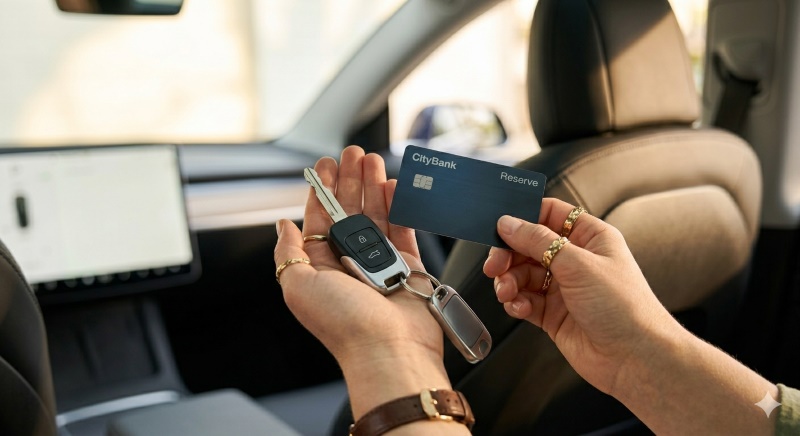
Many travel rewards credit cards, such as Capital One Venture, Amex Platinum, and Chase Sapphire, offer rental car coverage when you use the card to make payments. This is excellent for car rentals and can save you $20 to $30 per day, but it won’t cover a private vehicle.
4. Get quotes from the insurtech options
You can obtain an online quote in a matter of minutes from Hugo, Clearcover, and Mile Auto. The majority of the applications have an onboarding process that takes less than ten minutes and provides you with an actual price rather than merely an estimate, making them genuinely simple to use.
5. Examine the policy document itself.
I am aware. This is not done by anyone. Even so, take a quick look at the exclusions section. Keep an eye out for terms like “non-owner car exclusion” or geographical restrictions. You can avoid a later claim denial by reading for five minutes.
6. Keep proof of coverage on your phone
You get a digital insurance card right away from the majority of app-based insurers. Take a screen grab. Digital evidence of insurance is accepted by all states, so you should be able to access it without having to search through emails.
Mistakes People Make (Including Me, That One Time)
1. Assuming “borrowing” is covered automatically. As a sporadic driver, your friend’s insurance may or may not cover you. States and insurers have different “permissive usage” clauses. Don’t make assumptions. Inquire.
2. Buying the rental car counter’s daily insurance without checking your card. If you already have rental car coverage through your credit card or current policy, then $27/day CDW (Collision Damage Waiver) is frequently absolutely unnecessary.
3. Canceling a standard policy to buy short-term, then forgetting to reinstate. Even brief coverage lapses are detected by insurers and might result in a large price increase when you return to a standard policy.
4. Going with the cheapest option without checking state minimums. California’s minimum liability requirements may not be met by a policy that satisfies Georgia’s. In some states, the least expensive plan could leave you underinsured and legally vulnerable.
5. Not telling the insurer about other drivers. A claim may be rejected or closely examined if your policy designates you as the primary driver and you allow someone else to drive. Always let others know who will be operating the vehicle.
What Does It Actually Cost?
Because of the way it operates, short-term coverage is nearly always more costly per day than an annual insurance. Flexibility comes at a cost. However, it can make financial sense when compared to being uninsured or being trapped into a six-month coverage that you will eventually cancel.
According to estimates I’ve seen and retrieved, daily coverage through an app-based insurer can range from $8 to $22 per day for a typical sedan with a spotless driving record, depending on the state and coverage level. For someone who drives less than 500 miles, a pay-per-mile plan might cost between $30 and $60 a month.
“Paying $15 per day for short-term coverage for a three-week automobile loan is preferable to paying $180 for a six-month policy that you’ll cancel in a month, especially after accounting for the inconvenience of cancelation.”
What I’d Actually Recommend
Start with Hugo if it’s available in your state, if you’re renting a car for a set amount of time, and it can’t be covered by either your own or the owner’s policy. Right now, the most flexible option available in the US market is the on/off model.
Compared to a typical annual policy, Mile Auto or Metromile (Lemonade) will actually save you money if you’re a low-mileage driver trying to save expenses on a car you own but don’t drive very often.
Check your credit card coverage before hiring a car, please. It’s sitting there, and it’s free.
My relative was properly insured, had proof on her phone, and experienced no trouble during her 19 days. She paid roughly $210 in total for the three weeks of coverage. She would have spent more than $400 on normal six-month coverage, not to mention the inconvenience of having to cancel midway through. Once we understood the choice was available, the math was clear. I hope you do now as well.
It’s worth knowing
The US insurtech sector is changing quickly. Businesses are continuously changing their apps, increasing coverage levels, and entering and leaving states. Before completing the quote procedure, make sure the insurer is still active in your state by visiting their website.
Last Updated 2026
