Subaru BRZ 2025: Under the Hood and Beyond
Introduction:
To do a proper technical review under the hood, we can take a closer look inside. Some things we like, some things we do not. Right after this, let’s dive in.
Under the Hood
Let’s start our technical review under the hood. Here, you have one engine and two transmission options. The engine is a joint venture between Toyota and Subaru—the FA24. Compared to the previous generation, there are many improvements.
This is a 2.4-litre boxer engine. Boxers are unique in mechanical construction: you have two valve covers made of plastic (previously aluminum), a two-piece cylinder head, and dual variable valve timing with four cams. It also has two timing chains and the world’s largest front timing cover. Notably, it uses manual valve adjustments via caps instead of hydraulic lifters.
The FA24 engine block has a more complicated design than the FA20, making some services trickier. However, the cooling system is simple, with a water pump at the bottom and a thermostat and heater core. Toyota’s contribution is the D4S fuel system, combining direct and port injection. There’s also a new oil cooler, a well-placed oil filter, and improved baffles to prevent oil pooling during track driving.
The engine requires careful sealer application, which can be challenging for service work. Regarding transmissions, there’s a six-speed manual and an optional automatic. The manual clutch is aggressive for daily driving, while the automatic is smooth but not the fastest.
Under the Car
Looking underneath the 2025 Subaru BRZ, it closely resembles the Toyota 86 with minor differences. Everything in the front is covered with steel panels, making service easier. The front suspension features a steel lower control arm, steel knuckle, and Brembo calipers.
The rear has a multi-link suspension, a steel knuckle, and a limited-slip differential, which is easy to service. Compared to the 86, the BRZ feels more planted and track-focused. The main difference is in suspension tuning: the BRZ is more serious for track use, while the 86 feels livelier and playful.
Exterior Review
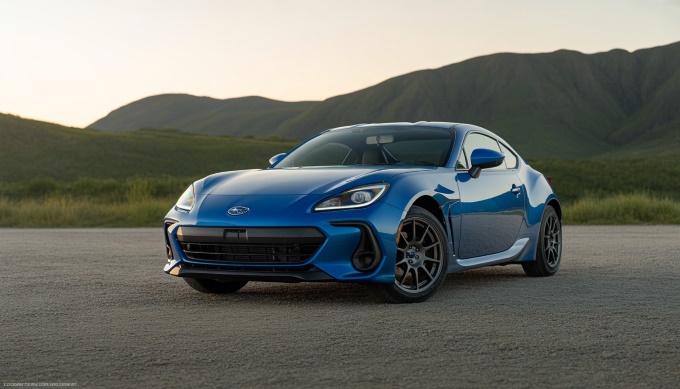
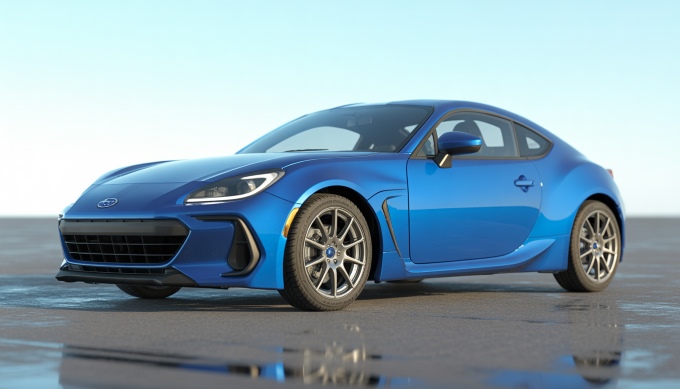
The BRZ exterior is similar to the GR86 but features a more mature Subaru design. The front bumper, headlights, and vents are subtly different. The side profile is sleek with functional vents, and the fuel door has a unique shape.
The TS edition lacks a duckbill spoiler, emphasizing a more serious look. Badging is noticeable but acceptable. The trunk is usable for a sports car, though compact, and there’s no spare tire, only an inflator kit. Overall, the BRZ has a clean, purposeful design.
Interior Review
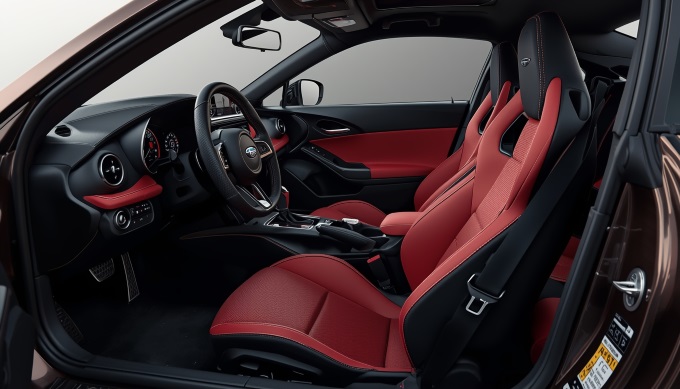
Inside, the BRZ mirrors the GR86 with minor differences. The manual shifter feels great, though the clutch is aggressive. The steering wheel is simple, small, and functional. Dual screens provide essential information, while the infotainment system feels dated and wired-only for Apple CarPlay and Android Auto.
HVAC controls are physical with convenient toggles, but the interior lacks a proper armrest. Seats are heavily bolstered yet reasonably comfortable. Driving-wise, the BRZ feels more focused than the GR86, providing a serious, planted driving experience. The back seat is minimal and only suitable for light storage.
Should You Buy One?
The Subaru BRZ is a joint venture with Toyota, with Subaru handling the car and Toyota contributing the fuel system. While the BRZ feels slightly more serious and track-oriented than the GR86, it costs more despite being nearly identical.
Both cars are fun, rear-wheel-drive sports cars suitable for daily driving. However, pricing and option packages push the BRZ closer to higher-tier Subaru models, making it less accessible. While we love the BRZ, many buyers may logically choose the GR86 for similar performance at a lower price.
2025 Subaru BRZ interior and price
2025 Subaru BRZ:
The latest automotive tech, and everything that keeps gearheads excited. Today, we’re taking a deep dive into the 2025 Subaru BRZ, a sports car that refuses to let driving excitement fade in an era of electrification and SUVs. Does this lightweight rear-wheel-drive coupe still deliver that pure analog thrill? Let’s find out.
Exterior & Design Changes
Subaru has kept the BRZ’s design sharp and aggressive for 2025. The low stance, sculpted lines, and wide fender flares give it a true sports car attitude. The front fascia gets a subtle refresh with a new grill design, revised LED headlights, and improved aerodynamics to enhance performance. At the back, the signature ducttail spoiler remains, but Subaru has introduced a more pronounced rear diffuser for better downforce. And for those who love a bold look, a new performance blue paint option is available alongside standard colors.
Engine & Performance Breakdown
Under the hood, the 2025 BRZ keeps the 2.4L naturally aspirated flat-4 engine, pumping out 228 horsepower and 184 lb-ft of torque. Subaru has made subtle refinements to the power delivery, ensuring even sharper throttle response and a broader torque band. The biggest update: a new performance package, which includes upgraded Brembo brakes, revised suspension tuning, and a lightweight carbon fiber roof to reduce top weight. As always, you get the choice between a six-speed manual for that true enthusiast experience or a quick-shifting six-speed automatic with paddle shifters.
Handling & Driving Experience
The BRZ has always been about razor-sharp handling, and Subaru has fine-tuned the chassis even further. The Torsen limited-slip differential ensures maximum grip through tight corners, and the retuned suspension improves both stability and comfort. Subaru also worked on reducing body roll while maintaining that lightweight, connected feel. At just 2,850 lbs, the BRZ remains one of the lightest and most balanced sports cars on the market.
Interior & Technology
Inside, the 2025 BRZ keeps things driver-focused. The cabin features new Recaro-inspired sport seats with Alcantara and leather trim, offering better bolstering for spirited driving. Tech-wise, the 8-inch touchscreen infotainment system now comes standard with wireless Apple CarPlay and Android Auto. Subaru has also upgraded the digital instrument cluster with a more customizable layout, including a G-Force meter and track mode display. For safety, Subaru’s EyeSight Driver Assist is now available on both manual and automatic models, offering adaptive cruise control, lane departure warning, and pre-collision braking.
Pricing & Competitors
The 2025 Subaru BRZ starts at around $30,000 for the base model, with the performance package pushing it closer to $35,000. It continues to battle the Toyota GR86, Mazda MX-5 Miata, and even the upcoming Nissan Silvia revival. With its balanced chassis, improved tech, and driver-focused DNA, the BRZ is still one of the most engaging sports cars in its class.
Final Thoughts
If you love pure driving fun, balanced handling, and a lightweight coupe that won’t break the bank, the 2025 Subaru BRZ is an absolute winner. While it doesn’t pack turbocharged power, its sharp responsiveness and analog feel make it a gem in today’s market. Would you choose it?